

 Vietnamese
What is application lifecycle management (ALM)?
Application Lifecycle Management (ALM) is the strategic process of managing a software or product lifecycle from initial idea through design, development, testing, deployment, and end of life. ALM enables software engineering teams to efficiently collaborate on projects using proven Agile practices and trusted, up-to-date information. It is a foundational discipline for successful products, teams, and companies.
Why is ALM important?
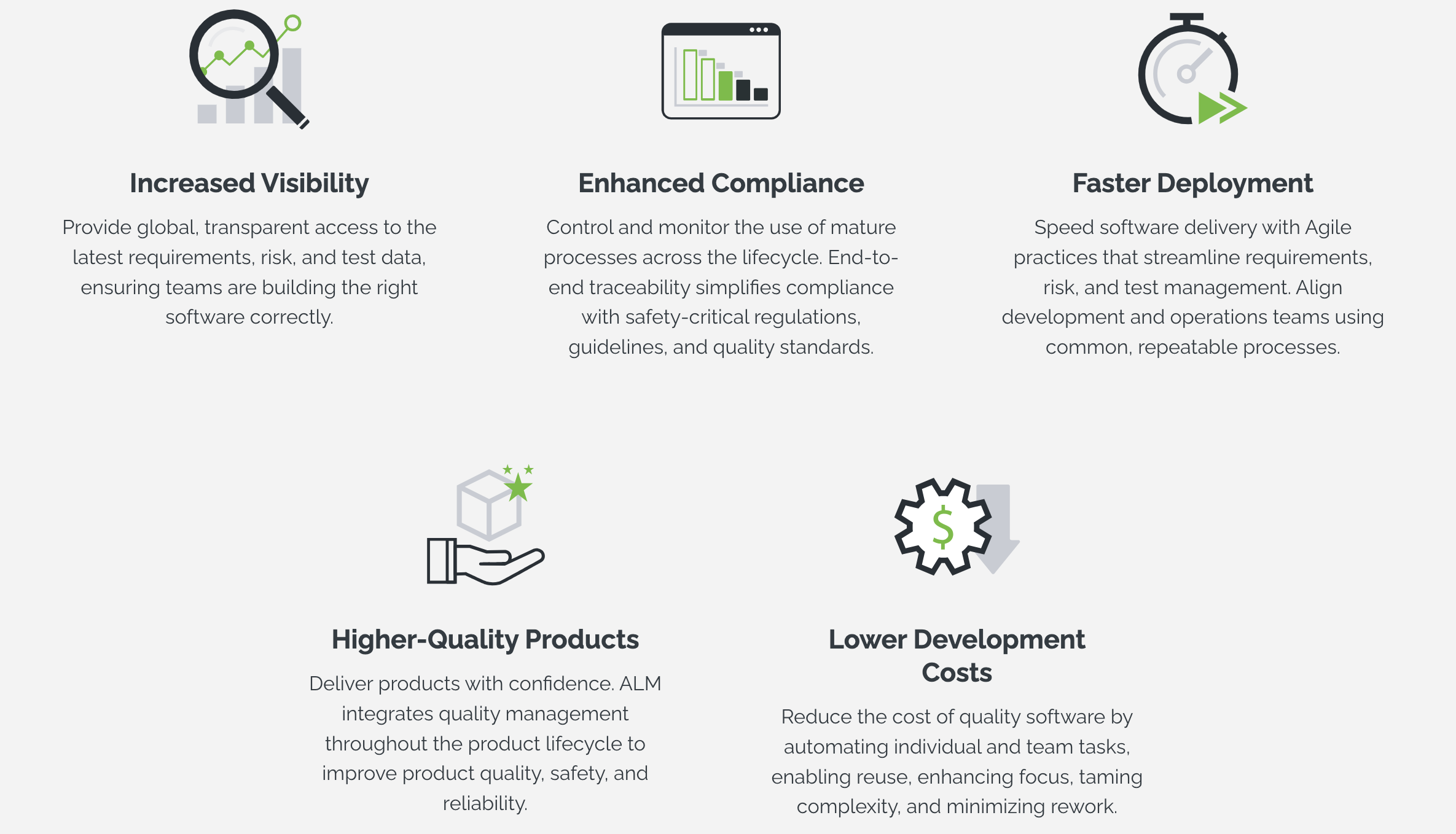
The benefits of application lifecycle management
Key areas of ALM
Governance
Establish a transparent, well-documented governance framework for software development. ALM enables organizations to establish transparent processes for decision-making and improve oversight and accountability of projects and software systems.
Application Development
Navigate the inherent complexity of modern, Agile software development. Today’s software engineers are vastly more productive than their predecessors of even a few years ago. This remarkable efficiency is delivered in the context of added complexity. By providing a single source of truth and end-to-end traceability for software development, covering requirements management, test management and project management, ALM makes modern software development possible.
Maintenance
It’s estimated that maintenance consumes 40-70% of the costs of the software lifecycle. Ongoing software maintenance is necessary to fix errors, maintain competitive parity, and respond to evolving customer needs. Application lifecycle management enables teams to efficiently track and manage changes and scheduled product releases over the lifetime of the product, enabling organizations to fulfill the promise of their product long after initial deployment.
Key ALM capabilities
Excellence in application lifecycle management requires mastery of the following: